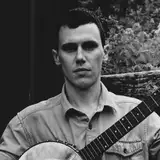
Justin asks me all about the concept of "neck angle" as it pertains to traditional banjo building and Will asks about converting his Goodtime to nylon strings: Pros vs. Cons and Considerations!
https://www.patreon.com/cliftonhicks
https://clift...
2018-03-11 22:08:49 +0000 UTC
View Post
Here's another nice short film; this one's all about John Haywood.
"Video Portrait of John Haywood by Derek Poore shot on location at the Confluence of Little Doubles, Big Doubles, and Buffalo Creeks in Knott County in Southeast Kentucky."
2018-03-10 17:01:00 +0000 UTC
View Post
Good morning everybody:
George R. Gibson and John Haywood talk about banjo playing etc. for the Kentucky Arts Council. George shows us a simple demonstration of Morphine and later breaks out (what I would call) his "extra-fancy square dance shuffle" on a pretty hot rendition of Hook & Line.
Watch closely: in this clip, Gibson's approach to the early dance song Hook & Line inv...
2018-03-10 11:39:45 +0000 UTC
View Post
Nathan sent us a great multi-component question that I found quite challenging--especially the last part!
Digital Library of Appalachia: http://dla.acaweb.org/
Lomax Kentucky Recordings: http://lomaxky.omeka.net/
Field Recorders Collective: 2018-03-09 01:54:11 +0000 UTC
View Post
A well-known banjo virtuoso and alleged folklorist (who seldom sings) once told me something along the lines of:
"I don't sing because most of those old songs are just random verses people sang as a way of remembering the tune. They cared more about the tune than the words."
I now realize that the above assertion was drawn either from a narrow scope of ethnomusical experience o...
2018-03-08 16:20:26 +0000 UTC
View Post
"My interest has always been in the older layers of the tradition, and not solely because they are interesting links with the past. Whenever they’re performed in the voices and with the hands of gifted singers and musicians, they are not just artefacts of the past – they are a living, ongoing art form…and a very powerful one."
"In the 1970s and 1980s, it was very exciting...
2018-03-08 15:07:14 +0000 UTC
View Post
CJ is building his own banjo at home and asks about where to find blue prints and what parts to order vs. make yourself. Jonas is learning to sing with his banjo and asks for a bit more guidance on that issue.
https://www.patreon.com/cliftonhicks
2018-03-08 00:43:52 +0000 UTC
View Post
Curtis asks for some insight on how to learn a new song by ear: "do I think in terms of musical notation or what?" And what's with all this "Right" and "Wrong" that many so-called banjo experts are obsessed with?
2018-03-06 19:00:02 +0000 UTC
View Post
I possess copies of two home tape recordings made by Banjo Bill Cornett in which he and others sing, talk and play the banjo.
The tapes that I was given appear to contain most of the tracks released on "The Lost Recordings of Banjo Bill Cornett" (Field Recorders' Collective 2005) AND several tracks which, for unknown reasons, did not make the final cut. Perhaps the most important of these myster...
2018-03-06 17:45:53 +0000 UTC
View Post
I figured out this way of playing Cumberland Gap after listening to Lee Sexton's album "Whoa Mule!" (June Appal Recordings 1988) and his uncle Morgan Sexton's 1992 "Shady Grove."
According to his album's liner notes, Morgan tuned to dCGDF when he recorded his version. I use Lee's more typical fDGCD tuning instead, here tuned 3 frets lower than standard pitch (dBEAB, actual).
The unusual ly...
2018-03-06 17:01:01 +0000 UTC
View Post
Let's take a few minutes to honor Watauga County, NC folk musician and instrument builder Rick Ward. Rick's distinct "double knock" style of playing goes hand-in-hand with the unique instrument building tradition he inherited from his grandfather Tab Ward. His album of traditional banjo songs and ballads "Keeping the Tradition" (Rick Ward Music 2010) is worth acquiring if you are at all interested...
2018-03-06 01:22:53 +0000 UTC
View Post
In this video I talk about walnut, maple, cherry, oak and poplar--several commonly available hardwoods that are suitable for banjo building.
I find that certain woods are better-suited to different parts of the banjo for both structural and auditory reasons. And I'll talk about some of the more interesting qualities of Red Oak that make it an excellent choice for the pot of your mountain b...
2018-03-05 16:59:59 +0000 UTC
View Post
I built my first banjo at the age of 16 with the help of my father and the book Foxfire 3: Animal Care, Banjos and Dulcimers, Hide Tanning &c. If you're interested in gourd banjos, those are covered in Foxfire 6.
We'll go over how that first banjo of ours went vs. the instruments Robyn and I are building and selling today.
2018-03-04 16:22:44 +0000 UTC
View Post
Soon to be published by University of Illinois Press:
"Inspired by Dena Epstein, this is the first book to use a holistic approach in exploring the history of the banjo; it is an excellent compilation of articles for those interested in the music of Africa and the Americas."--Jacqueline Cogdell DjeDje, author of Fiddling in West Africa: Touching the Spirit in Fulbe, Hausa, ...
2018-03-04 11:47:52 +0000 UTC
View Post
(Tuning is fCFBbC, two frets below gDGCD)
Here's another look at how we "fan up the neck" as a way of adding another layer of rhythmic and visual character to our banjo playing.
I'll start by playing the first part of the tune, then transitioning back-and-forth between fanning and up-picking a few times. Toward the end I'll wrap it up by showing you a few of the different fannin...
2018-03-03 20:00:01 +0000 UTC
View Post
fCFB♭C (relative gDGCD) up-picking/up-stroke
The last time yall saw me I was playing "Gospel Plow/Hold On" in which I used this showy rhythmic technique. Fanning up the neck is one way that early banjo players added more variety to their performances, which were often solo.
George Gibson, Leroy Troy, John Haywood, Matt Kinman and Camden Pugh are a few other living banjo players you...
2018-03-03 19:01:01 +0000 UTC
View Post
fCFB♭C (relative gDGCD) up-picking/up-stroke
Here's the basic right hand work for Gospel Plow/Hold On.
2018-03-02 23:00:40 +0000 UTC
View Post
fCFB♭C (relative gDGCD) up-picking/up-stroke
Here's a slowed down close up view of the left hand playing Hold On!
2018-03-02 19:00:01 +0000 UTC
View Post
Sounds like up-picking with lots drop-thumbs and brushing to fill in as he notes high up the neck on this beautiful piece of music. Lots of other great recordings (and plenty of photos and good writing) to be found on this website: www.sandrockrecordings.com
Sounds like I need to revisit our up-picking session with a video on how I think he's playing.
 2018-03-02 08:53:46 +0000 UTC
View Post
2018-03-02 08:53:46 +0000 UTC
View Post
fCFB♭C (relative gDGCD) up-picking/up-stroke
In response to one or two requests here is what I call Hold On! played out of gDGCD. The part where I "walk the fingerboard" is merely rhythmic filler--my own personal expression of the song. I encourage you to play it this way if you like, or come up with your own version of this haunting classic.
[January, 2025: Simple ov...
2018-03-01 19:00:04 +0000 UTC
View Post
Here's the right hand playing that same gDGCD instrumental run as shown previously. This string of notes could probably be inserted into a number of other similar-sounding songs.
(Filmed by Robyn M. Latham)
2018-02-28 21:36:50 +0000 UTC
View Post
Here's another view of the left hand playing the notes for Pretty Polly (gDGCD). After playing the basic melody of the song to orient us I go into this simple "bluesy" run which involves noting the 1st + 2nd strings at the fifth fret with some repeated drop-thumbing (look out for the right hand close up soon).
2018-02-27 23:58:16 +0000 UTC
View Post
(relative gCGCD)
Here's the basics of old school, traditional up-picking. This archaic style was most recently popularized by Pete Seeger in his 1950s banjo tutors. Other great up-stroke banjo players are Matt Kinman, Roscoe Holcomb and (my personal favorite) Creed Birchfield of Roan Mountain, Tennessee.
Tell me what you think about up-stroke banjo playing; can you think of some othe...
2018-02-27 00:43:09 +0000 UTC
View Post
Let's keep talking about "Singing!" Many of yall's comments and interactions on this subject have been thought-provoking to say the least. In this clip I talk over some of my deeper thoughts and memories concerning the ancient art of song.7
This is another whopper of a subject that I look forward to hearing about from YOU.
2018-02-26 01:50:47 +0000 UTC
View Post
Andrew asks about how I've worked to develop my singing voice over the years and who some of my influences might be.
I will revisit this subject in a longer, more in-dept video SOON.
2018-02-25 21:01:49 +0000 UTC
View Post
(Banjo is tuned one full step below gCGCD)
Our recent discourse on the rhythmic possibilities of two-finger picking brought my mind back to this wonderful old song. The "waltz" picking pattern I use here is a mixture of both thumb-lead and index-lead (with the latter being mainly a plain guitar-style strum).
I learned this song from a recording of Jerron Paxton & Frank...
2018-02-25 18:39:01 +0000 UTC
View Post
(banjo is tuned to gCGCD, relative)
David recently asked if there are any other rhythmic possibilities with a two-finger, thumb-lead playing style besides the typical "bum-ditty" pattern. A three-count waltz-like rhythm is one example that comes to mind. I yall want to, we can look at a number of different examples of this type of picking.
2018-02-25 12:49:02 +0000 UTC
View Post
Kit asks about how to fix up a set of old friction tuners and Ian asks me all about lyrics and songs (i.e. what's the deal with "migrating" lyrics and when should or shouldn't we incorporate our own original verses/arrangements?).
2018-02-24 23:40:08 +0000 UTC
View Post
Here's a look at the basic left hand work on "Pretty Polly" gDGCD, close to how I learned it from George Gibson of Knott County, Kentucky, more than 20 years ago.
2018-02-24 17:17:34 +0000 UTC
View Post
Here's the next part of our "Pretty Polly" series. Tuning is relative gDGCD, thumb-lead, two-finger picking style.
2018-02-24 17:15:23 +0000 UTC
View Post