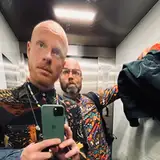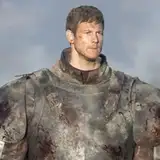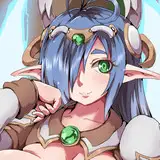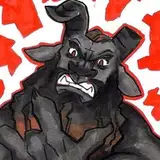
AM = Anna M. / Idrelle.
CG = Chilled Glasses.
CG: Good evening, Patrons, and welcome to your first question and answer session with the writer of Wayfarer, Idrelle. I’m your host, Chilled Glasses, and most importantly I will not be talking in that voice the entire time.
AM: (laughing hysterically)
CG: So, we’ve got some questions today that you guys have submitted and we’re going to be talking to Anna about some things about the creative process—
AM: Yeah.
CG: —some things about the game and lore, and any particular follow-up questions that I deem necessary.
AM: (laughing) Thank you.
CG: Just so everyone knows to start with, this will very much be Anna answering most of the questions, but because I have been around for the entire creative process of this project so far, I may be chiming in now and then with a little bit of additional input or clarification. That’s not because I’m inserting my own opinions, that is because everything that we’re talking about here are things that me and Anna have talked about before as well.
AM: Yeah. And we’re giving this a try for format in terms of the Q & As as something a little more conversational than me just writing answers to questions and then posting it, so let us know if you like this format.
CG: But all right, without further ado we’re going to be starting with a few questions about the creative process in general. We have a multi-part questions here:
What are your biggest sources of inspiration? What are some rituals that you do / don’t do when you hit a creative block?
So we’re start with the first part of that question: What are your biggest sources of in spiration?
AM: All right, so I’m going to divide this into two sections. So there’s my inspirations in terms of books and other writing (and novels and that kind of thing) and then there’s inspiration in terms of video games and video game writing and narrative design and all that good stuff.
So, I think in terms of actual fantasy prose writing, my biggest source of inspiration is Brandon Sanderson. He is straight-up my favourite author. I’ve been reading his books for a really, really long time, but… He is my favourite fantasy author because of the way that he considers worldbuilding and magic systems, and he also like… I find his characters really compelling, his stories take a really long time to unfold but they’re very satisfying when you finally get to the end, and he has a really entertaining grip on dialogue and banter. That’s always something that I appreciate is good dialogue between characters because I’m a playwright, right? (laughs)
There’s just a lot of things that I love about his writing and I think that since I’ve been reading his books for such a long time that has definitely impacted me as I’ve continued to write myself over the years.
CG: Something, too, that I find, particularly with Brandon Sanderson, that I think we’re starting to see the seeds of in Wayfarer is… One of the things that Brandon Sanderson does really well is that neither the setting, the magic system, the characters, or the story exist in a bubble. They are all part of one thing.
AM: Yeah.
CG: And so the story, the characters, and the magic system, or just the general setting of the world that they’re in, they can’t exist without each other. Whatever the current world situation is plays a huge part in the story. Whatever the mechanics of the magic system really affects the characters. And because he’s so great at writing characters and writing dialogue, the characters are the thing in the end that drives the story, but it still feels like they are living within the rules or the climate of whatever setting that they are a part of.
AM: Mhm.
CG: And… In discussions with you, I think that what we’ve seen so far with Chapter 1 is that has been a big piece of importance for you as well. The Wayfarers aren’t just moving through the world doing whatever they want to because they’re Wayfarers and they are cool—
AM: (laughing again)
CG: They are moving through a pre-existing political landscape. And they are just part of that.
AM: Yeah. Like I think that with, at least in the way that I consider character development is is that characters can’t… Characters don’t exist in a bubble. The most important thing that I think about when I make a character is what was the environment they grew up in and how does their current environment impact them. And environment can mean so many different things, it can mean the place that they’re living in but also you’re thinking about socio-economics and politics and all of the things that go into people, you know, and the way that we live.
CG: Setting doesn’t just mean “Aeran grew up somewhere that had a lot of forest and it was around this year”. Well, no, the setting that someone grew up in is everything that you just said and that affects them so much more than “they grew up somewhere where it rained a lot.”
CG: Definitely Sanderson is your biggest inspiration in terms of general fiction and books—you also mentioned game inspirations.
AM: Yes.
CG: Would you like to talk more about those?
AM: Sure. (laughing)Um well, because Wayfarer is interactive fiction but I’ve been really invested in applying RPG mechanics to interactive fiction to see what spawns from that and see how that can impact the story and make it feel like it’s a novel, but it still feels like a game.
And in terms of game inspiration—obviously Dragon Age. It’s not a secret, most people know at this point that this game started as a Dragon Age fan game and then I moved it into an original world, so some characters have crossed over. And I don’t think I’ll be able to completely shake its Dragon Age roots—
CG: Sorry, what’s Dragon Age?
AM: …
(Both laughing)
CG: But no, yeah—
AM: Yeah—
CG: I would say that seeing the project back when it was a Dragon Age fan game, you’ve pretty much shaken your Dragon Age roots.
AM: Aw, thank you.
CG: If you take a look at, yes, it’s a fantasy world that has a bunch of different races and a magic system and a player character with companions—
AM: —who you can romance—
CG: Like yeah, sure, that falls within the Dragon Age formula, but it also falls into the formula of a lot of fantasy games.
AM: That is true. Looking at the collective, like, what has been done in recent years or even recent decades in terms of “how do you structure a fantasy RPG where you have a player-created main character who interacts with a variety of different people on their journey.”
CG: There’s that old adage that everything’s already been done before and if you take a look at this, oh it’s got Dragon Age inspiration, it’s got Witcher inspiration, there’s inspiration from all places, but I don’t think that your game feels like an interactive fiction version of any of those.
AM: Well, inspiration is tricky because so much happens when you’re writing, so much happens within your subconscious that you don’t even realize that you were inspired by a certain thing until someone points it out or you realize it six months later and you’re like “Oh yeah.”
Because I think with inspiration… Something that a lot of my writing mentors said again and again is that you become a better writer by reading a lot, and I think it’s a similar thing with game design. You learn how to structure a game by playing a lot of games. And so I think with that in mind, I am probably subconsciously pulling from all of my favourite games in different aspects.
CG: Question 2: What part of your creative process do you find the most rewarding in terms of effort versus time inputted?
AM: So… (laughing)I find this a little tricky to answer. The part of the process that takes the most time, like significantly the most time, is writing all of the content. And so I really enjoy that part, but I don’t really get to see it in full until it is completely coded and actually in the game. So it takes a really, really long time, but it is satisfying to have everything come together.
CG: And what would you say, if we’re looking at the writing process being the main crux of your time spent on the game, what is the most rewarding part or common thing that happens in that writing process?
AM: I think it’s either writing scenes that I’ve been looking forward to writing for a really long time—and I have scenes like that in every single chapter, there’s moments all over the place where I’ve had this in my beat chart for such a long time, I’m like “Yes! I finally get to write this thing!”
But then it’s also like having an idea for how a particular mechanic will happen and then writing the content for that, and then I get really excited about coding that and having that work.
CG: I have been there for a lot of times when you were struggling with that one particular area and it’s always nice to see you get through it.
AM: Yeah.
CG: Do you write with “kill your darlings” in mind or do you lean into things that feel indulgent? Conversely, how do you implement scenes or mechanics that you are not fond of but know the story may be better for them?
Another multi-part question. We’ll start with the first part: Do you write with “kill your darlings” in mind or do you lean into things that feel indulgent?
AM: So, first draft: indulge yourself. Write whatever the heck you want to write. But when you’re editing, that’s when you start drawing back on things and then you have to decide to let go of certain sections.
Especially with this particular project, there have been things I have written in the first draft where I realize if I keep this in the game, it’s going to cause problems later on down the line in terms of either expanding the content by WAY too much for it to, like… I would have to add in another ten thousand words and it’s not really justified for this particular moment? Or it ends up being unnecessary, or it draws things out for way too long.
There is an example that I’m thinking of that will be in the alpha build when I update it next. But basically there’s a situation where Aeran and the MC are on a stealth mission and they are hiding in a closet (as you do). And as I was going through the different options in how to deal with that situation—because they’re hiding in the closet and there are sentries passing by in the corridor right outside.
There’s a couple different solutions for how to get out of this situation: they can keep waiting until the guards leave, if the MC has dreamweed, then they can use the dreamweed to knock them out, there’s an agility check where you can knock them out with force, and then I was thinking, “Oh, well, you should really put in something and have it as a Strength check for the people who have more points in Strength.”
And I wrote the outcome of that, and to make the Strength check different from the Agility check—because the Agility check physically knocks out the guards, so the Strength check needs to be different because I don’t want to double-up on the two—the Strength check ended up being if you succeeded at it, then the MC kills the guards.
And then I was writing a section later on, several scenes down, and I was like, you know this doesn’t make sense. If they’ve killed the guards and other sentries have found those bodies, they are not getting out of this villa alive. So I was like, okay, we’re either going to have to cut this or we’re going to have to re-write this in a way so that they don’t end up killing the guards on a Strength check because this creates way too many problems in terms of continuity later on.
CG: Lessons from within the writing process: murder has consequences.
AM: Murder has consequences! Who knew?
CG: Conversely, how do you implement scenes or mechanics that you are not fond of but know the story may be better for them?
AM: I just go ahead and do it. I think with any writing project, regardless of what it is, like whether it’s interactive fiction or if it’s a play or if it’s a novel or whatever, you are always going to end up writing scenes or different situations that you don’t like. Or maybe you find them boring or maybe you find them frustrating or maybe you have writer’s block with this scene and I just don’t want to write this thing.
But if it’s for the benefit of the narrative arc or, in this case, the benefit of the game mechanics and I need to have them there, then I just have to force myself to do it. (laughs)
CG: Fair enough.
AM: Yeah.
CG: Question 4. My question is around the scope of the current game. I'm curious how you decided the length of it (I can see 17 chapters on the blog), and in general – the amount of locations and characters? I'm curious if after you decided it would not be a Dragon Age fangame, did the scope increase or decrease?
And as a related question – there are a lot of not only story but also tech and learning Twine etc, did you ever think of making a small experimental project first and then return to Wayfarer?
CG: So, I’m actually going to start with some random bits of this question first since I know they are fast answers.
AM: Mhm.
CG: Did the scope of the game increase or decrease when it was no longer a Dragon Age fan game?
AM: Yes.
(pause—laughing)
AM: It increased.
CG: There we go. I was going to say this is not a yes or no question.
(Both laughing)
CG: But yes, it increased because it was originally going to be—I believe you phrased it as essentially an Inquisition agent mission.
AM: Yeah. And I think in my original beat chart like way way way way back, it was going to be like maybe six or seven chapters? It was a pretty standalone, contained adventure. But basically in taking those characters and shoving them into an original universe and all the worldbuilding and all the plot restructures… I shouldn’t even say “plot restructures”—it’s a new story! It’s a new story. It’s just a completely new story.
And just to be playing in my own universe… I have to do the work to set up everything that I wouldn’t have to do in a fan game.
CG: Totally.
AM: Right? It’s like fan fiction. Fan fiction you can… If you’re writing fan fiction of a pre-established IP you can just jump right in. And everyone knows who the characters are and everyone knows what the setting is, you don’t need to explain anything, you can just go. Whereas with your original work you have to do all that groundwork. And that takes time.
CG: Yeah. And in general, the amount of locations and characters? So we tried to actually math this out—
AM: Yeah.
CG: And essentially the overall answer is Read and Find Out.
AM: (laughing)
CG: But with locations—you don’t have a firm answer on that right now, right?
AM: No, because I’m still playing with a few different things and there are things I still need to do. Like the map of Velantis, I know roughly where everything is and what all the different districts are called, but because I haven’t made the final version of the map yet I don’t have a specific answer for that?
CG: Oh, yeah. And for characters. 90% of the characters haven’t been written yet, in terms of any named person that you’re going to run into. But to break this down, how do you divide up your main characters?
AM: So, it’s divided into basically Companion Characters, who are the characters who are with the player character for the duration of their journey, and then Faction Characters. So, there are six factions in Velantis who you will engage with in different ways. And each faction has about three or four different characters attached to them. Some of them are antagonists, some of them aren’t. It’s very flexible because, again, it’s all choice-based and it depends on how you interact with them. And siding with certain factions will make other factions dislike you… (laughing)
CG: So, kind of as we worked out the math—
AM: Mhm.
CG: It’s your seven main characters, somewhere around 18-20 different faction characters, and we’re looking at over 30 major named characters of varying importance to the game. And beyond that, we’ll see.
AM: Yeah, because the way that I work—especially on something that has as large a scope as this game does—is that I don’t decide absolutely every single possible detail before I start writing. Because otherwise I would be worldbuilding for years before I actually got around to writing.
This is kind of similar to the research problem that happens if you’re writing historical fiction where you just keep researching and just keep researching and then you still feel like you don’t know enough about the things that you need to know, and then all of a sudden you’ve spent two years researching and you haven’t written a single word of the project that you want to write.
So, similarly with worldbuilding and outlining and plot structure and all that kind of stuff, there comes a point where you have to say: “I have done enough. I don’t know all the answers. But I know the answers for the major things.” So I can start writing and actually start working, because a lot of things will resolve themselves… You won’t know the answers to them until you start writing.
The most important thing is to have a beat chart, which maps out the main plot points of your story.
CG: Speaking of the beat chart, how did you come to the length of the game? It was through that beat chart, correct?
AM: Yeah. And as I was doing the beat chart, I had it in mind that I wanted each act to be roughly equal in terms of the number of chapters. So Act 1 is going to be about five chapters and Act 2 and Act 3 will be six.
And the other thing I had in mind as I was doing that structure, I was thinking about the chapter structure of games like Final Fantasy VII: Remake and Final Fantasy XV, which have a very long list of chapters for the player to work through. Final Fantasy VII: Remake, I think, has seventeen chapters and Final Fantasy XV has fifteen chapters (because of course it does, (laughing) I wonder why they made that decision!).
And something that I noticed when I was playing both of those games is that some chapters are more linear and they have a very defined start point and end point and it just shuffles the player through all of these plot points towards a very specific end. And then other chapters are a lot more open in terms of how you can tackle things and how you can navigate the events.
So that was something—in terms of inspiration and in terms of my plotting—that I was thinking about.
CG: And the last part of this question: because there’s a lot of story tech and learning Twine that you had to go about, did you ever think of making a small experimental project first and then return to Wayfarer?
That was kind of what the Dragon Age game was, wasn’t it?
AM: Yeah, it was. Because that was the first thing I had ever done in Twine. And because I was playing with RPG mechanics right from the beginning, that taught me a lot about how I wanted to go about things. I think the main thing that I learned from doing it, even though… like… I didn’t progress very far. I didn’t finish the Dragon Age fan game. I only got maybe about 5% into it. (laughing)But that was enough for me to realize that I needed to cut back on certain ideas, make things a little bit simpler in terms of certain mechanics—
So, for example, in the Dragon Age fan game, because I was trying to mimic what BioWare does in the actual games, I had multiple classes, which meant multiple weapon types, and then you could use strength and dexterity and magic, and all of these different stat checks and stuff. And it ended up being way too much.
The reason that the main character of Wayfarer uses a sword and only a sword is because the Dragon Age fan game taught me that it is way too much work to write fight sequences with multiple different weapon types, especially if you have stat checks involved as well.
Because then not only are you writing passes and fails for each check, you’re writing multiple versions of each pass and each fail depending on the weapon type. Because you can’t just… At least in the way that I write action sequences, I can’t just replace $weapontype with a variable and say: “You swing your sword. You swing your dagger. You swing your… bow and arrow?”
I think with something that is a lot more simplified and is like “You attack with your bow. You hit for 10 points of damage.”—something like that, it’s fine there. But the way that I’m writing action sequences, it doesn’t work.
CG: All right, that’s everything for Creative Process. Moving onto some questions about the game and lore.
It’s probably looking a little too far forward and I understand if it's too far in the future, but I keep seeing mysteries pile up in Rhesainia and it makes me wonder if there are any plans to use this setting for future projects?
AM: At the moment, no. But it is a very big world and there is definitely the possibility of more stories being written in it. But I think that is too far in the future for me to consider right now. I need to finish this game first.
CG: The seventeen chapters of this game.
AM: …yes.
CG: Will we have a base camp/home base kind of space to "go back to" in Velantis? I know all the party members probably won't hang out in one spot since they're all living in the city as it is so they probably have their own places to live, but I'm curious if the Wayfarer will have one.
AM: Yep. You will have a hub. And it will be for the chapters where you have Exploration sequences, like that will be your starting spot and then you will decide where to go. It’s kind of like a hub world for all of the characters to intersect and stuff. That’s kind of necessary with the amount of characters there are.
CG: Will it be possible to miss out on recruiting any of the party members?
AM: Not for the main cast. But there are secondary party members that you can miss. There is one specific character who… You encounter this character in Rona and if your actions lead to them dying, then they will not show up in Velantis.
CG: Death is a thing that makes a commute like that a little difficult.
AM: A little bit, a little bit.
CG: With the various romance interests already decided, I'm curious: Did you create them first, and then find a way to work them into the story, or did you plot the story out first and the characters came naturally?
AM: So, with some of the characters it’s… their creation is a little bit… weird… in that specifically Alexia, Ren and Calla were all made—oh, and Aeran (sorry, Aeran)—um. Alexia, Ren, Calla and Aeran were all created for the Dragon Age fan game. So when I made them, I had a completely different set of expectations in mind. Like the reason that Alexia, Ren, and Calla are respectively a human, an elf and a dwarf is because I was thinking about, you know, the—
CG: The main Dragon Age races.
AM: The main Dragon Age races, right? And Aeran, in particular, he was supposed to be a tutorial character in the vein of Tamlen, or… what… hm… I forget. I’m blanking on some of the other tutorial characters in Dragon Age: Origins.
CG: Tamlen, Merrill—
AM: Outside of the Mahariel origin.
CG: There’s the knight—
AM: What’s the dwarf?
CG: —who joins you in the human noble one—
AM: Yeah, I’m trying to remember what the dwarf’s name is in the Aeducan origin.
CG: The merchant that you end up meeting—
AM: Yeah.
CG: —on the surface?
AM: Yeah.
CG: Does it start with an O?
AM: No… I forget.
CG: Whatever. Not important.
AM: FINE DWARVEN CRAFTS!
(Laughter)
CG: So, they came originally because you had crafted them to fit the Dragon Age staples. And then everyone else, they’ve been coming hand-in-hand with the story?
AM: Yeah, because it’s really difficult for me to separate character and plot because the characters create the plot, but then the plot creates the framework for the characters, so both happen at the same time.
But the way that I work is that I use placeholders a lot. So I know that there is a role that needs to be filled, but I don’t necessarily know right away who is going to fill that role. And then as I continue to do my worldbuilding and as I continue to do my writing and all of that, it becomes clearer as to who fills that role.
So, Mel and Nelani and Felix came out of that because I had gaps in my story and I was like “Hmm… There is a character who needs to fill this gap.” And then they came out of different narrative needs that I had.
CG: So, all of the above, in how they come into play.
AM: All of the above.
CG: Question about the player character:
The Player Character seems to have a relatively set personality, with the opposed more so deciding how they react to things. What made you decide to go this way and why do you think it's important?
AM: Uh, so, this is a personal preference thing.
So, I have found—again, emphasizing personal preference—I have found that, at least, when it comes to interactive fiction, it’s really, really difficult to do blank slate characters in a way that is engaging for me, personally, as a player. Because I often find that they are so vague and left so open to interpretation. And even if the game is employing mechanics where you can get different results and get different flavour text depending on what personality choices you take and which different personality choices are established, I still find that the bulk of the text itself is not enough to establish a character who has a defined character arc.
And when I think about the games that I have enjoyed roleplaying the most, it tends to be games that have a defined role for me to fill. Either through something like the Witcher 3 or Horizon: Zero Dawn where it’s a predefined character and you’re choosing how they interact with different scenarios, but all their dialogue still makes sense for them, it’s still in character for them, even if it leads to different reactions. Or something like Dragon Age 2 where, again, you have a little more flexibility in the way in which you play your Hawke—or your version of Hawke—but it’s still within a certain framework.
Like that framework… yes, that framework puts restrictions on the type of roleplaying that can be done, but you can still have a character that works towards a defined character arc and towards a defined end.
CG: And it allows people to interact with them in meaningful ways instead of having to keep everything incredibly shallow because they have to account for your character being so many different things.
AM: Yeah.
CG: Last question. Can you imagine Wayfarer being anything other than an interactive fiction game, such as an open-world RPG, a visual novel, a first-person shooter—
AM: (laughing)Ah.
CG: Or is it set in stone with what it is?
AM: Well, never a first person game, because I can’t play those, they make me sick. So, no. But, no, in all seriousness, the way I am designing this game is that it is intended to be interactive fiction. I think it would have to change drastically in order to fit a different genre. Because there are things and ideas that I am playing with in its structure that would be pretty much impossible in, say, a normal video game.
For example—this is something you told me when you read the first draft of the fight with the Count at the end of Chapter 1… in the A Route… where… I forget what you said, it was something along the lines of you weren’t expecting it to branch into four different ways…?
CG: What I had said was that with the way that this game is going, you essentially as a player think that you probably understand where the branches are and where they’d be going and where they’d be back to bottlenecking. So, like, with the fight with the Count: okay, so there’s probably a Persuasion check where you avoid the fight and every other route leads to a fight—
AM: Mhm.
CG: But the way that it goes, there’s so many different types of fights that can happen. Different ways they can start, different ways they can end. There’s a few points where they can end up linking up with another version of that route, but if you were a game designer actually trying to design and code that set piece, it would be virtually impossible because you’re going to spend so much time on a version of the fight that 75% of the players will not see. And it’s why regular games have more of that bottlenecking problem, because you are going to have to code the Fight at the Count’s Manor, which means there may be some small variables that can be changed within that. Maybe there’s more enemies, maybe there’s easier enemies, maybe you have this equipment or you don’t, but regardless the fight will always be The Fight.
But with yours, it’s Fight A, Fight B, Fight C, Fight D.
AM: Yeah.
CG: And you can enter into those in different ways. You will never see semblances of the other ones.
AM: Yeah.
CG: Just with the branches, there are differences between satisfying branches and non-satisfying branches. And the ones that are satisfying are the ones where you don’t just feel like you’re being sent down a different path, but you actually are.
And with the replay value of Wayfarer, you’ll have your one playthrough and decide to go back and do it again and make different choices. And then you won’t even see your previous playthrough.
AM: Because my intention when I started designing this project was that I wanted to create something that had a lot of replay value, but also something where the replay value doesn’t come from just reloading and trying different things, it comes from you do one playthrough, you have one experience, you do another playthrough, you get another experience.
I’m never intending for everyone to see absolutely every single part of the game. It’s too much content. You’re probably not going to find everything. Please don’t try.
CG: It’s why it can’t really exist as an open-world RPG because game studios are going to be hampered by time eventually. And you can’t be affording to spend large portions of your development process coding things 25, 40, 60 percent of players will never see.
AM: Yeah. Because something I’ve been playing around with a lot with the design of this game is leaving little surprises for players who take certain options. For example, talking about the Count fight again at the end of Chapter 1, if you are Melusine for your ancestry, you will have an alternative version of the fight with the basilisk, because that fight happens under water. But because that fight happens under water, there’s a whole bunch of different… The ending of that fight ends up being just naturally completely different from everything else. It’s almost like an easter egg. I don’t think a lot of people have found it.
CG: But yeah. [Wayfarer’s] an interactive fiction, it works best as an interactive fiction, and it’s interactive fiction to stay.
AM: Well, it’s intended to be interactive fiction, so. Like there are things that this form can do that other forms cannot do, right? And that’s kind of like the enjoyment of it. Like as a game developer I’m interested in pushing the form and seeing what you can do with it.
But that’s one of the reasons why failing your stat checks has become so important. It’s not just about choosing to do certain things, but it’s also… Okay, you’ve chosen to do something, but does it work or does it not work? And then what happens when it doesn’t work? Or what happens when it does work?
For example, one of the things I’ve been really enjoying is that Persuasion checks… The passes and fails will have different dialogue that the player character says depending on whether you pass or you fail. Because I’ve always found it weird with persuasion checks in a lot of fantasy RPGs where you say exactly the same line regardless, and then you’re given a percentage of whether you’re going to pass or fail, but you say the same thing. And you either pass or fail depending on what your chances are or where your stats are at or whatever.
And, as a writer I was thinking about this, and… what’s the difference? If I’m persuading someone and I’m bad at it, chances are I’m going to say the wrong thing or say the right thing, but in the wrong way. But if I’m very coercive or I have really good persuasion skills, then I’m going to say exactly the right thing in exactly the right way. I’ve been having fun putting in that difference of dialogue.
CG: All right, that is all the questions we have for today. So, definitely let us know what you thought of this format—a little more of a podcast-esque long-form conversation. And we’ll probably be doing something like this again one day.
AM: Yeah, not sure when. Probably several months down the line from now when there’s more content out and that kind of thing, but yeah.
CG: But all right, thanks for joining us for this little Q & A everybody.
AM: Thank you for stopping by.
CG: Hope you have a fantastic rest of your day, night, or whatever time it is there.
AM: All right, good bye, friends!