George Gibson | "Barbara Allen"
Added 2018-05-07 01:49:11 +0000 UTC(gDGAD or f#DGAD, relative)
I have been sorting through my old field recordings (most made between 2008 and 2013 when I was based out of Boone, North Carolina) and managed to recover several that are worth sharing.
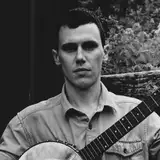
This was recorded at the home of master banjo player, researcher and mentor George R. Gibson in Knott County, Kentucky during a summer gathering in 2011. Almost all of the people who'd come to listen to George sing, talk and pick the banjo that evening were younger musicians who owed some part of their style and technique to his influence.
George's own music manages to be both deeply traditional and fiercely individualistic--a quality that has become increasingly scarce in the decades following the mid-20th century folk revival. Though many "old guard" folklorists still regard Gibson as an inconvenient anomaly, his work is highly regarded among a growing cohort of academics and musicians.
------------------------------------------------------------------------------------
'In Scarlet Town where I was born there was a fair maid dwelling,
She was the fairest of them all and her name was Barbara Allen.
It was all in the month of May when sweet buds they were swelling,
Sweet William on his death bed lay for the love of Barbara Allen.
He sent his man into the town to the place where she were dwelling,
Saying, "Master's sick, Lord, he's very sick if your name be Barbara Allen."
O Slowly, slowly she got up and slowly she drew nigh him,
But all she said when she got there: "Young man I think you're dying."
"Do you remember in yonder town in the place where we were drinking?
You drank a health to the ladies all but slightly Barbara Allen."
"Yes, I remember and remember it well the place where we were drinking,
I drank a health to the ladies all but gave my love to Allen."
As she was going back to the town she heard those death bells knelling*
At every stroke they seemed to say, "Hard hearted Barbara Allen."
* 'In England, an ancient custom was the ringing of bells at three specific points before and after death. Sometimes a "passing bell" was first rung when the person was still dying, then a bell at the actual time of death - the Death Knell, and finally the "Lych Bell" which was rung at the funeral as the procession approached the church. The Canon law of the English church also permitted tolling after the funeral. The ringing of the lych bell is what is known today as the Funeral toll.
'The Death Knell was regulated by statutes in the time of Henry VIII and Elizabeth I, but the immediate ringing after death fell into disuse. It was customary in some places by the end of the 19th century to ring the Death Knell as soon as notice reached the clerk of the church (parish clerk) or sexton, unless the sun had set, in which case it was rung at an early hour the following morning. In other places it was customary to postpone the Death Knell and Tellers to the evening preceding the funeral, or early in the morning of the day of the funeral to give warning of the ceremony.'
(from Wikipedia)