It’s a poorly kept secret that I got into interactive fiction development because I wanted to add experience with non-linear storytelling to my portfolio. It’s also a poorly kept secret that Wayfarer’s first prototype started as a Dragon Age fan game.
Now it’s been a few years, I still feel a little embarrassed talking about Wayfarer’s earliest origins. I think in our current media culture, stories (usually novels, but this extends to other works as well) that started as fan endeavours are looked down upon. With critics pointing to Fifty Shades of Grey (Twilight fanfiction!) and the After series (One Direction fanfiction!), referring to authors taking down their fanfics to “file the serial numbers off” and republish them as original work, there’s this overall feeling that anything with a whiff of fanwork about it is automatically cringey, derivative, poorly written, and a cash-cow. And therefore it’s something to be embarrassed about.
I don’t want this post to become a greater rumination on the value of fanwork, but I mention this because I was a fanfiction writer for years. I probably still would be if I wasn’t working full-time on Wayfarer and had time to spare for other creative writing. I have almost two decades worth of fics under my belt, and I think it’s pretty safe to say that I became a good writer because I wrote so much fanfiction. The writing courses I took in my BA and MFA programs certainly helped, but writing and publishing is a skill I’ve honed since I was fourteen and I have fanfiction to thank for that.
There’s a lot of good that comes out of fan fiction. There’s a community of likeminded people, there’s encouraging readers, there’s fellow writers pushing each other to experiment and try new things. Fanfiction authors are very passionate about the things they create. Often times, they are creating their own characters, lore, and material to either fill in the gaps or do something completely different from what’s presented in the source material. When you take the original ideas that can occur in this context into account, the line between fanwork and inspiration becomes blurred. Where does the fanwork end and the author’s original ideas begin?
The fact of the matter is that Wayfarer wouldn’t exist without Dragon Age. It wouldn’t exist without a lot of things—all my favourite stories and writers, who I’ve been inspired by along the way. But there’s something particularly frustrating about feeling ashamed of Wayfarer’s origins because it originated within fanwork. Even though I love fanfiction and I don’t regret any of the fics I’ve written, there’s still a tiny part of my brain that says I need to sweep the Dragon Age connection under the rug otherwise…
What, exactly? I’m cringey? A bad writer? Not legitimate?
When I first started experimenting with interactive fiction, I didn’t know what the hell I was doing. I hated ChoiceScript and didn’t make it very far into using it. Twine was better, but it was challenging: there was a lot to learn, the documentation was confusing, Googling help often wasn’t that helping due to the sheer amount of conflicting information online for the program’s different iterations and format languages. I don’t have a coding background, so getting from Point A (how do you do [idea/function/thing]?) to Point B (the game now does [idea/function/thing]) was a slog.
While I was learning to code interactive fiction, I also had to think about the story I had to tell. There’s a lot that goes into developing fantasy fiction and none of it is easy. It’s not just about plot and characters, you have to spend a significant amount of time worldbuilding.
It’s a lot of work.
At the time, making a fan game was desirable for several reasons:
1. I love Dragon Age and I love its world. Making a fanwork meant that I didn’t have to do any worldbuilding. It was a preestablished sandbox I could play in, cutting out what is perhaps the most difficult part of writing sci-fi/fantasy.
2. Audience. Writing in solitary can be very difficult and not a lot of people can do it successfully. You need feedback, you need readers interested in your work—you need an audience. But it is difficult to accrue interest in original works in online spaces, especially fandom-adjacent spaces. By making a fan game, I already had a built-in audience. I was a fanfiction author with a small following of readers who enjoyed my writing, writing fanfic of a game series. The chances were pretty good that Dragon Age fans would be interested in a fan game.
3. The prototype was intended to be a short, focused story, with a handful of original characters and some appearances from canon characters. I could theoretically use it as a portfolio piece to demonstrate how I worked within the context of an existing IP*.
*I can’t really speak to the application process for junior scriptwriting positions. Sometimes having a prototype like this is a good thing, sometimes it’s not—it depends on the company and what they have asked for. But if you do find yourself applying to be a writer in the video game industry, do not send them fanfiction as demonstration of your work. Writing fanfic is not comparable to the type of scriptwork writing rooms do. You will not be taken seriously and it is generally considered pretty rude.
Looking back, I think this was a good instinct. As I worked on the initial concept, some early writing, and continued to learn how to code, my blog gained about 1000 followers, all Dragon Age fans. It had been five years since Dragon Age: Inquisition released and the fan community was hungry for another Dragon Age game, fan-made or not. And people were excited—I had questions in my inbox about my original characters and their backstories, what cameo characters would appear, what the race/class selection system would look like, how many romances there would be and with who. I had folks drawing fan art based on early concepts before I even got a playable prototype out.
But the more I worked on it, the more I realized I had bit off more than I could chew. Interactive fiction is very time-consuming to make. When your gameplay revolves around making choices, you have to create the content for those choices, otherwise it becomes a linear story and at that point your story may be better served as a novel. These games can get very content dense, very quickly, and the player is only ever going to see the tip of the iceberg on a single playthrough.
I think my audience knew how time consuming making this fan game had become. My updates got further and further apart. People started to ask me whether I would open to a Patreon to support the game’s development—something I was adamant that I would not go because a Patreon for a fanwork set in an established IP was a huge legal liability, particularly when BioWare already had their own text-adventure game in The Last Court. Having a Patreon to support a fan game was not something I was comfortable doing.
By the time I released my first prototype of the Dragon Age fan game, I was already regretting starting the whole project. It was so much time and so much effort, and because it was a fanwork, it wasn’t something I felt I could put my name on and say was fully my own. I was quickly realizing three things:
1. The story I wanted to tell, with the characters I had created, could not be done in the DA universe. I was pushing against established lore, sometimes ignoring it in favour of developing my own ideas. And I was losing interest. The series that had been beloved to me for so many years just didn’t interest me the way it used to. There was something else I wanted to do, and it was definitely not this.
2. If I was going to actually make this game, I needed funding. It was too much work to do while working full-time at a physically draining and soul-sucking retail job. I needed either grants or Patreon. And I couldn’t do that unless I was making something wholly original.
I stopped posting about my fan game pretty soon after I released the prototype. Behind the scenes, I was starting over—building a new plot, fleshing out the world and the lore, recreating my original character from ones that worked in the DA universe to ones that worked in my original one, taking concepts and game mechanics from the prototype and reworking them into something that actually worked without massively inflating the amount of content I had to write.
I never finished the fan game. It was a test run: mechanics, character creator, action scene, that’s it. I never got to introducing all the characters I had planned or the plot I had been eager to explore. I announced I was abandoning it and making an original one in the tail-end of 2019. The response was mixed. I had quite a few messages of people telling me they were unfollowing the project because they weren’t interested in original work. But I also had a lot of people who had been following me for almost a year who were unabashedly excited and encouraging. They congratulated me on taking the next step, because, as it turns out, though they came for a Dragon Age game, they were staying because they wanted to see something new.
The seeds of the prototype are all over Wayfarer, in both subtle and obvious ways. The ancestry selection is ripped straight out of DA: there are humans, elves, and dwarves because Dragon Age has humans, elves, and dwarves (which itself is derivative of other fantasy works--this is just a trope at this point). I created melusine and aeda to flesh it out a little further and work with new lore. Rhesainia is in the planet’s southern hemisphere because Thedas is oriented that way in Dragon Age and I quite liked that (there aren’t a lot of western fantasy stories where the south is cold and the north is warm). Alexia is a Guild mage because she was a mage in her original DA conception. Ren is an elven assassin because that’s what he was supposed to be in the prototype. Calla’s family’s connections to the Merchants’ Consortium in Wayfarer come from them being surface dwarf merchants in the prototype. Aeran’s established friendship with the player character is there because that’s how he was conceived in the prototype. Nova and Malsara used to be Venatori and worked for a mage cult, which is now the Order of Lethalis. Even the player character begins their story in Rona—a backwater town in the middle of nowhere—because that’s the type of environment they started in during the prototype. Some names—like Sophia Anaxas, Umbria Bellaris, and Allegra Arantir—carried over, but they are far removed from their original concepts.
The mechanics of the prototype also influenced the game and made it was it is today. The whole concept of Wayfarers as warriors who are immune to magic come from my frustration with writing and coding the action scene in the prototype: it was unbelievably difficult to write an action scene where the player not only chose their class and their weapon, but could also use magic. That in combination with the dice rolls made it so much work to write skill checks because I had to write different iterations based on whether the player character could use magic or not. I hated writing magic into the system so much that my choices were to either make the player character a mage or yeet their ability to do magic out of existence.
… naturally I thought the latter was more interesting, and boom, Wayfarers.
At this point, the game is so far removed from its origins that I don’t really like saying “it started as a Dragon Age fan game.” It’s both true and not true—it depends on what stage of development you’re looking at. But I do find that when I talk about this publicly, people get the wrong idea, or they take it as an excuse to deride my work.
The game that is now Wayfarer crossed the line from fanwork to inspiration to original work. It’s derivative, yes, but so is everything. Writers are inspired by other writers, and that is a natural part of the writing process. Tropes exist as both writing tools and as a system of classification for genre fiction like romance and fantasy. At a certain point, it becomes less about the what (genre, tropes, narrative devices, popular ideas) and more about the how. How the author constructs their setting and tells their story is what makes it unique.
The prototype was released in May 2019 and doesn’t exist online anymore. If you’re interested in seeing it in action, you can download the HTML file from this post. If you’re interested in seeing the prototype in action, I've uploaded the game privately to itch.io.
Link: https://idrellegames.itch.io/wayfarer-prototype?secret=FV4QnFhBPy1BNXnpHGwRylFWKQI
I don’t know how playable it will be on mobile as it is not formatted for portrait mode.
Some warnings:
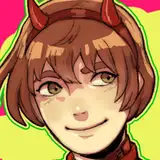
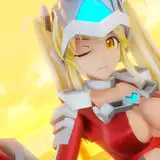
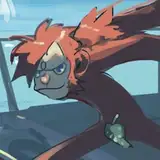
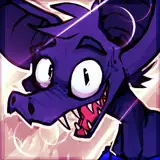
Additionally, here are some early character portraits made in the old Rinmaru avatar creator that never made it into the game. I found them when sorting through some old folders on my PC. This was before Picrews got popular for avatar creation.


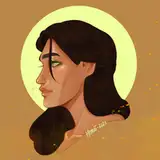
And, for posterity, here are the original portraits I commissioned from Rory Yaya of Alexia, Ren, Calla, and Aeran (Melchior, Felix, and Nelani didn’t exist yet). These were commissioned when I was working on the prototype. Rory was the first person I told when I decided to turn my fan game into an original work and she was so excited and fully supportive of that idea!
Though these remain their canon appearances (except Calla--parts of her design have shifted a little bit over the years), I don't think I will use these portraits in the game itself. I love them dearly, but it's important to have a consistent art style across the board and they don't fit with the updated portrait series Rory did for me. There's probably a few reblogs of these floating around on tumblr that are still tagged dragon age!


Kar Rev
2024-12-23 21:20:26 +0000 UTCKar Rev
2024-12-23 21:15:32 +0000 UTCAl
2022-12-23 18:43:02 +0000 UTCRoz
2022-12-03 23:21:18 +0000 UTC